

 > Import MP4 into Avid Media Composer

As we all know, MP4 is one of the most widely used multimedia formats, compatible with a vast range of digital devices, including smart TVs, tablets, and smartphones. However, if you're an Avid Media Composer user, you may be wondering: Is it possible to import and edit MP4 videos smoothly within this professional NLE (non-linear editing) system? Unfortunately, the answer might disappoint you. When attempting to load 4K MP4 footage into Avid Media Composer, you'll often encounter an "unsupported file format" or "import failed" error. In this article, we'll quickly explore the most effective methods to help Media Composer handle MP4 files seamlessly.
A Common User Scenario
"Is it possible for Avid Media Composer to accept a 4K MP4 file? I'm asking because I have a 4K video that only seems to be available in MP4 format, not MOV. However, Avid Media Composer doesn't seem to support MP4 natively. I'm just looking for any recommendations on how to get an MP4 file into Avid Media Composer for editing."
"I need to edit some screen-recorded videos, but they are all in .mp4 format. Is there any way to import them into Avid Media Composer? These clips are simple screen captures with no audio tracks, so I'm hoping for a straightforward solution."
The short answer is: it depends. While Avid Media Composer does support the MP4 container to some extent, compatibility is largely determined by the codec used inside the MP4 file, not the file extension itself. In fact, the codec support can vary depending on your version of Media Composer, your operating system, and even the specific hardware you're using. So, why can't you import MP4 directly? And more importantly, how can you fix it? Follow this article to find the answers and practical solutions to resolve MP4 import failures in Avid Media Composer.
MP4 is a digital multimedia container format that is most commonly used to store video, audio, and even subtitles. We obtain MP4 videos from a wide variety of sources—for example, downloading music videos or movies from the internet, recording 4K or 1080p footage with smartphones or digital cameras, or exporting projects from other video editing software. Frankly speaking, the challenge of editing MP4 files in professional post-production software is a common headache for many users, largely because MP4 is designed for storage and playback, not for editing. Its highly compressed nature makes it efficient for file sharing but difficult for timeline performance.
Common Issues When Importing MP4 into Avid Media Composer
The root cause of most import issues lies in the codec inside the MP4 container. Although Avid Media Composer can read certain MP4 files, it does not support all codecs—especially not modern, highly compressed ones like H.265/HEVC, XAVC S, XAVC I, or XAVC HS. These codecs are often used in 4K and HDR content, but they are not optimized for frame-accurate editing. Moreover, compatibility can also be affected by the version of Media Composer you're using, as well as your system's hardware and drivers.
Avid Media Composer Not Recognizing MP4 Files? Here's How to Fix It
So, how can you import and edit H.265/HEVC, XAVC S, XAVC I, XAVC HS, or other MP4-based formats in Avid Media Composer without errors? Don't worry—since the primary issue is codec incompatibility, the most efficient and reliable solution is to transcode the MP4 files into an editing-friendly format that Media Composer natively supports.
How to Convert MP4 to Avid Media Composer–Friendly Formats
Need a 100% reliable way to import MP4 into Avid Media Composer without errors? Since MP4 files often contain high-quality video, you'll naturally want to preserve as much of the original image quality as possible during conversion. That's why it's essential to choose a solution that balances quality and performance. One highly effective option is to use a dedicated video converter like Acrok Video Converter Ultimate, which allows you to convert MP4 to Avid-compatible formats such as DNxHD, Apple ProRes, H.264, or MOV—all in just a few clicks, with minimal quality loss.
Free download and try Acrok Video Converter Ultimate:
 100% Safe & Clean 100% Safe & Clean
The following guide uses the Windows version of Acrok Video Converter Ultimate as an example, but the Mac version follows the exact same process.
Drag and drop your MP4 videos directly into the application window. Alternatively, you can click the "Add File" button to browse and locate your source videos. The software supports batch conversion, so you can add multiple files at once to save time.
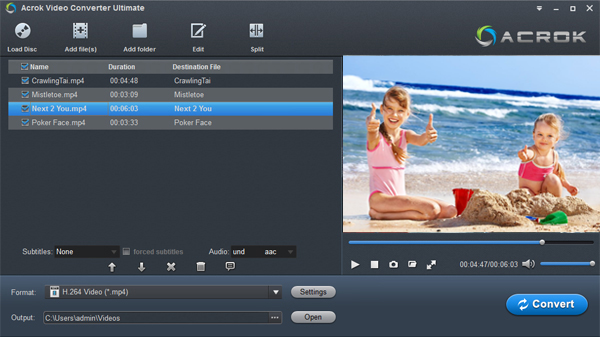
At the bottom of the main window, locate the "Format" tray. From the "Editing Software" category, it is recommended that you select "Avid DNxHD 1080P (*.mov)" for optimal editing performance and compatibility in Avid Media Composer.
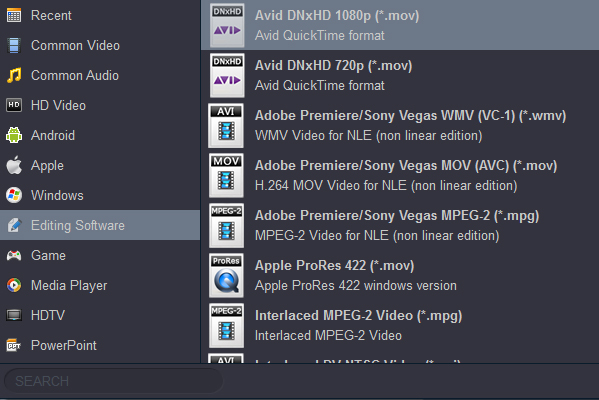
Useful Tip:
DNxHD MOV is not your only option. You can also choose H.264 MP4 or QuickTime MOV from the "Common Video" category. The H.264 MP4 option, in particular, can preserve good image quality while maintaining a relatively small file size. However, if your system has sufficient RAM and processing power, it's always better to work with a codec that is designed for editing, such as Apple ProRes 422 or ProRes 4444. These codecs offer superior performance during timeline scrubbing, playback, and rendering, making them the preferred choice for professional workflows.
Once you've configured all the settings, simply click the big "Convert" button. Depending on the file size and your system performance, the process may take a few minutes. Once completed, you'll have a new video file that is fully recognizable and editable in Avid Media Composer—without any errors or glitches.
In reality, Avid has gradually phased out and never fully embraced native MP4 editing within Media Composer. As noted in an official Avid blog post: "Our previous MP4 file format was limited to decoding for playback. We have never offered support for encoding MP4, and overall usage of this format has been very low." Additionally, newer codecs like H.265/HEVC MP4, XAVC S MP4, and XAVC HS MP4 are still not natively supported by most professional post-production tools, including Media Composer.
That said, transcoding with a reliable tool like Acrok Video Converter Ultimate remains one of the most practical and effective solutions. Whether you choose H.264 MP4, Apple ProRes, or DNxHD as your intermediate editing format, the key is to select a codec that balances quality, file size, and system performance. To put it simply: ProRes files are lightly compressed, making them much easier for your GPU to process during both editing and playback. In contrast, H.264 files are heavily compressed and require significantly more processing power, which can lead to lagging or stuttering—especially when working with 4K or multi-layer timelines.
By following this guide, you should be able to eliminate MP4 import errors and enjoy a smooth, professional editing experience in Avid Media Composer.


I use tne ultimate conversion software to convert purchased Blu-rays to various formats for use on my Android tablet. I have tried many but nothing compares.
Womack, Arleigh
With Acrok Video Converter Ultimate for Mac, I can convert Blackmagic BRAW files to AIC and ProRes codec with fast speed. It works well and is easy to use, wonderful product.
Goodman, Paul
Copyright © 2026 Acrok Studio All Rights Reserved. Terms and Conditions | Privacy | Refund Policy