

 >
Edit MP4 in Premiere Pro
>
Edit MP4 in Premiere Pro
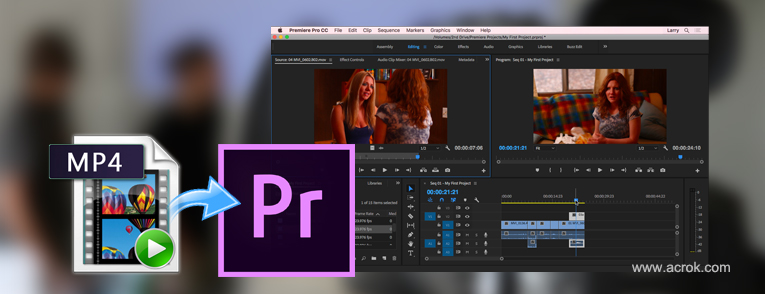
A User's Frustrating Experience
"I recently shot some video footage using my Sony FX30, and all the files are in MP4 format. When I tried to drag and drop them directly onto the Premiere Pro timeline, nothing happened—they just wouldn't show up. I also tried using the 'Import' menu option, but Premiere Pro gave me an error message saying the file format is unsupported or corrupted. The weird thing is, these same MP4 files play perfectly fine on my media player, so I know the videos themselves aren't damaged. I'm currently working on a time-sensitive project, and I really don't want to spend hours re-shooting or dealing with complicated workarounds. Is there any simple way to get these MP4 files onto my Premiere Pro timeline, or am I forced to convert them to another format first? I'd really appreciate any practical advice from someone who has faced this issue before."
This is a common cry for help across video editing forums, and if you're reading this, you've probably encountered the same headache. Fortunately, you're in the right place—this guide will walk you through exactly why this happens and how to fix it once and for all.
MP4 is a digital multimedia container format that is most commonly used to store video and audio, but it can also hold other types of data, such as subtitles, still images, and even metadata. It has become one of the most popular file formats for downloading and streaming video content from the internet due to its excellent balance between quality and file size. Many professional camcorders, action cameras, and smartphones also record footage directly in MP4 format, often delivering stunning ultra-high-definition quality, including 4K and even 8K resolution.
However, the convenience of MP4 comes with a catch. When editors attempt to import MP4 videos—especially those recorded with high-end cameras or screen capture tools—into Premiere Pro or other professional editing software, they frequently encounter errors or failed imports. This raises a common question: Is there a reliable way to import XAVC S, H.265, MPEG-4, or H.264 MP4 files into Premiere Pro on both Windows and Mac systems? Let's dive into the answers.
Premiere Pro is a professional non-linear editing (NLE) program widely used by amateurs, YouTube content creators, vloggers, and even Hollywood filmmakers for creating and editing high-quality videos. The software supports a vast number of video and audio tracks, along with a rich ecosystem of plugins and effects. Although Adobe has officially claimed that Premiere Pro natively supports MP4 files, many users still experience frustrating issues when trying to load MP4 footage into the software. So, what's really going on?
The "Can't import MP4 into Premiere Pro" problem occurs frequently, and in most cases, the culprit is codec incompatibility or a missing codec. It's important to understand that MP4 is merely a container format—like a box that can hold various types of video and audio streams. The container itself tells you nothing about the actual content inside. The real issue is that the specific video (and audio) codec used within that MP4 file may not be supported by Premiere Pro. For example, codecs like H.265/HEVC, XAVC S, or certain variants of MPEG-4 can cause import failures simply because Premiere Pro does not have native decoding support for them.
To overcome this incompatibility, the most effective and widely recommended solution is transcoding—converting the MP4 file into a format that Premiere Pro handles natively, such as MPEG-2, MOV (with ProRes or DNxHD codec), or WMV. This approach not only resolves import issues but also ensures smoother playback and more responsive editing performance.
Some users may suggest installing third-party codec packs that Premiere Pro can supposedly use as its default codec. We strongly advise against this. Here's why: MP4 is not just a codec; it's a container, and Premiere Pro's support for containers is limited by its internal architecture. Installing a codec pack on your video editing computer can permanently mess up your system's codec priorities unless you absolutely know what you're doing—and the reality is, most people who think they know, really don't.
Think of installing a codec pack like taking every pill in your medicine cabinet, hoping one of them will cure your illness. One might help, but the rest could cause serious harm. Instead, only install the specific codec you actually need, and always download it from a reputable, trusted source. In most cases, you simply don't need a codec pack—proper transcoding is a far safer and more reliable solution.
The Easiest and Most Reliable Solution
As we've established, MP4 import failure in Premiere Pro (2021-2026, CC, CS3-CS6) is mainly caused by incompatible codecs or missing decoders. This can be easily resolved by transcoding your MP4 files into Premiere Pro–friendly formats using a powerful yet user-friendly video converter and decoder. One highly recommended tool is Acrok Video Converter Ultimate, which is capable of handling all MP4 files regardless of their encoded video or audio streams.
To solve MP4 and other compatibility issues, simply download and install Acrok Video Converter Ultimate on your Windows 10/11 or macOS Sequoia computer, and follow the steps below.
Acrok Video Converter Ultimate is a professional MP4 converter that helps you convert MP4, MXF, MOV, MKV, AVI, WMV, TS, MTS, M2TS, TRP, TP, and many other video formats to popular formats such as H.265, H.264/MPEG-4 AVC, FLV, WAV, 3GP, DivX, VOB, ASF, and more.
 100% Safe & Clean 100% Safe & Clean
Key Features:
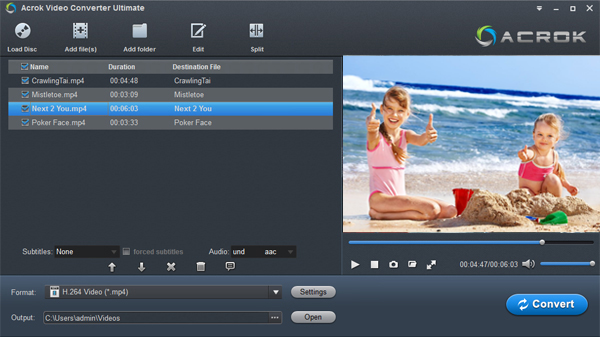
Install and launch the MP4 to Premiere Pro Converter. Click the "Add File" button to import your MP4 files into the software. Alternatively, you can simply drag and drop your videos directly into the interface. The software supports batch conversion, so you can add multiple files at once to save time and effort.
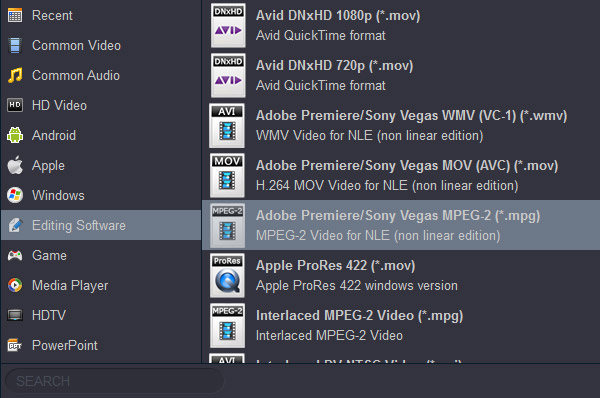
Click on the "Format" bar and hover your mouse over the "Editing Software" category. From there, select "Adobe MPEG-2 (*.mpg)" as your output format. The resulting MPEG-2 file will seamlessly fit into Premiere Pro, while preserving the high quality of your original MP4 video. Alternatively, you can also choose WMV or MOV as output formats, depending on your specific editing needs.
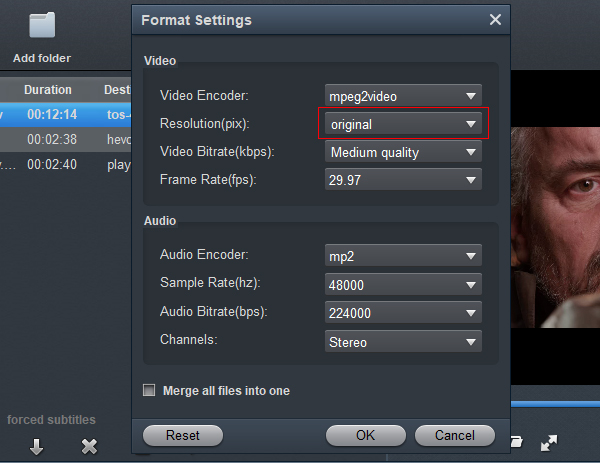
If the default settings don't meet your requirements, click the "Settings" button to access the "Profile Settings" panel. Here, you can manually adjust video size, bit rate, frame rate, sample rate, and audio channels. For instance, if you want to preserve 5.1 surround sound audio, make sure to set AC3 as your audio codec.
This MP4 Video Converter also offers powerful built-in editing features, allowing you to rotate, clip, crop, merge, adjust visual effects, add 3D effects, or even insert a personal watermark—all before conversion.
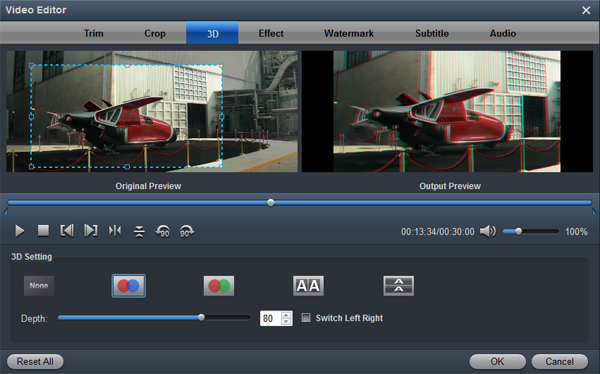
Once all settings are configured to your satisfaction, click the "Convert" button to begin transcoding your MP4 files to MPEG-2 for Premiere Pro. A progress bar will indicate how much time is remaining. Once the process is complete, you can import the resulting file into Premiere Pro and start editing immediately—without any trouble or error messages.
While there are several applications available on the market that can convert MP4 files to Premiere Pro–supported formats, Acrok Video Converter Ultimate stands out as one of the best choices. It offers a clean, user-friendly interface, makes the entire conversion process effortless, and delivers consistently high-quality results. Additionally, it can serve as a handy alternative to Premiere Pro for basic video editing tasks. Another notable highlight is its ability to decrypt and rip Blu-ray discs, allowing you to convert Blu-ray content to any format for playback on virtually any device—all at impressive speed.
If you're tired of wrestling with MP4 import errors and just want to get back to creating great content, give this solution a try. You'll wonder why you didn't do it sooner.
100% Safe & Clean 100% Safe & Clean

I have downloaded the updated version per the instructions. All seems to be working fine now. I found your software through a search engine (MSN) and compared it to 3 others with the trial versions prior to selecting Acrok to buy. Overall, I am satisfied with the product.
Michael Banks
Copyright © 2026 Acrok Studio All Rights Reserved. Terms and Conditions | Privacy | Refund Policy