

 >
Convert MXF to H.264 on Mac

If you work with footage from Sony XDCAM, Panasonic P2, or Canon XF cameras, you already know the problem: the MXF container holds professional-grade video, but most editing apps, streaming platforms, and review tools do not accept it natively. H.264 in an MP4 wrapper remains the universal interchange format—the one codec that plays on a 2026 MacBook, a client’s Windows machine, a social platform’s upload pipeline, and a broadcast QC station without transcoding again.
This guide covers how to convert MXF to H.264 on Mac with Acrok Video Converter Ultimate, what the output settings actually control, and where H.264 fits in a modern post-production workflow.
MXF is a container, not a codec. It can carry MPEG-2, AVC-Intra, XAVC, DNxHD, and other professional essences. The format is built for acquisition and archive, not for distribution. When you send an MXF file to a colleague, upload it to a platform, or try to review it on a phone, the container becomes the obstacle.
H.264 solves three practical problems at once:
The ITU-T H.264 standard was revised in June 2026, adding new SEI message interfaces for encoder optimization, content timing, and digitally signed content verification. In practical terms for a Mac converter, this reinforces that H.264 is still an actively maintained standard, not a legacy format being phased out.
Acrok Video Converter Ultimate for Mac is built to read MXF files from the camera families that dominate professional and prosumer production. The current page mentions Sony, Panasonic, Canon, JVC, and RED broadly. The optimized version should be more specific, because buyers search by camera system:
Free download Acrok MXF to H.264 Converter
 100% Safe & Clean 100% Safe & Clean
This is the most urgent update. The current page states “macOS Big Sur (version 11)” as the operating context. That is several major releases behind. In 2026, a professional Mac converter page should list:
A concrete system requirements block should look like this:
System Requirements
- macOS: macOS 26 Tahoe or later; macOS 27 Golden Gate compatible.
- Processor: Apple M-series chip (native) or Intel processor.
- RAM: 2 GB minimum; 4 GB or more recommended for 4K/8K MXF.
- Input: MXF from Sony XDCAM/XAVC, Panasonic P2, Canon XF, JVC, RED, and other common broadcast and cinema camcorders.
- Output: H.264 in MP4, MOV, MKV, or M4V containers.
This block alone signals to both readers and search engines that the page is maintained for 2026 hardware and software.
The current guide says to choose “HD Video > HD H.264 Video (*.mp4)” and mentions that other H.264 containers are available. That is accurate but incomplete. A useful 2026 guide should explain the three settings that determine whether the H.264 output is suitable for its intended purpose.
For MXF footage recorded at 1080p, output at 1080p. For 4K MXF, output at 4K if the destination supports it; otherwise, downscale to 1080p for proxies and review copies. Upscaling adds no detail and inflates file size. Competing workflow guides consistently recommend matching resolution to the source rather than forcing a larger frame size.
A single “best quality” bitrate is not the right answer. The page should distinguish between:
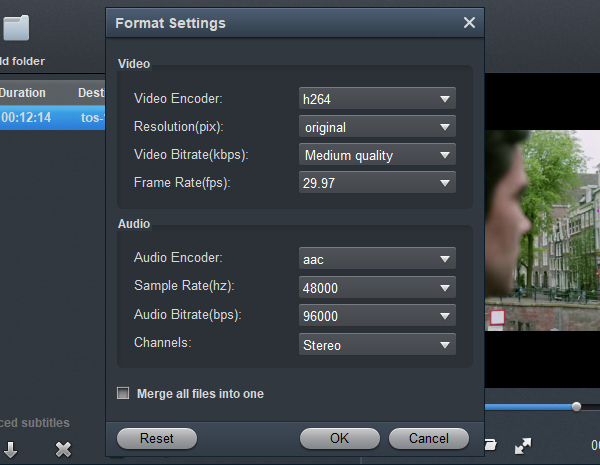
The converter’s Settings panel exposes bitrate, frame rate, and encoder controls; the guide should tell readers what to do with them, not just that they exist.
MXF from broadcast cameras often runs at 23.976, 25, or 29.97 fps. Changing frame rate during conversion introduces judder and complicates conform later. The default should be to preserve the source frame rate unless there is a specific delivery requirement that dictates otherwise.
H.264 is not the final destination for every project, but it is the working format that keeps a project moving. Three concrete uses should be reflected on the page:
Positioning the converter as a workflow tool rather than a one-off format changer differentiates the page from generic “MXF to MP4” listicles.
The existing three-step structure is sound; it just needs updated context and one additional step for output verification.
Drag and drop, or use the Add File button. Batch import is supported.
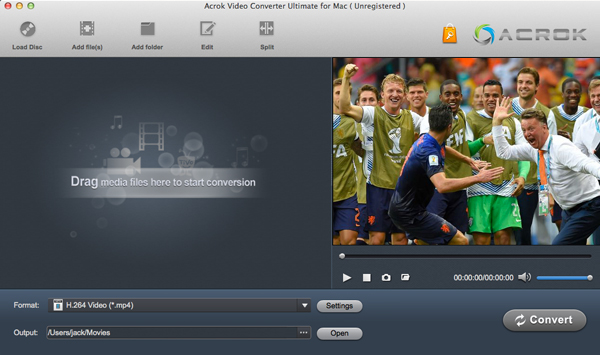
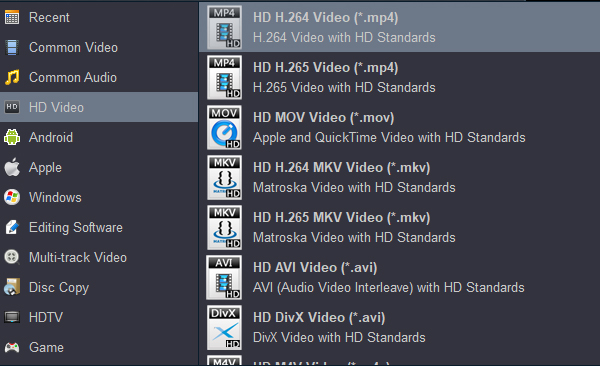
Navigate to HD Video > HD H.264 Video (*.mp4) for a standard MP4, or select H.264 MOV, MKV, or M4V from the Common Video category if a different container is required.
Open Settings and set resolution to match the source, choose a bitrate appropriate to the destination, and preserve the source frame rate. This is the step that separates a usable H.264 file from a file that looks wrong or is unnecessarily large.
Run the conversion, then play the output file on the target device or import it into the target application before deleting the source or moving to the next stage.
Does this converter work on macOS 27 Golden Gate?
The page should state compatibility with both macOS 26 Tahoe and macOS 27 Golden Gate. If validation is pending for a specific point release, say “compatible with macOS 26 Tahoe; macOS 27 Golden Gate support in progress” rather than leaving the claim ambiguous.
Can it convert 4K MXF to H.264?
Yes—4K MXF input and 4K H.264 output should be explicitly listed. If the product also handles 8K MXF, mention it as a capability, because 8K source support is a differentiator in 2026 converter comparisons.
Is H.264 still the right choice, or should I use H.265?
For maximum compatibility across devices, platforms, and editing tools, H.264 remains the safer default. H.265/HEVC produces smaller files at equivalent quality, but playback and import support are less universal. The page can recommend H.265 for archive and bandwidth-sensitive delivery, while keeping H.264 as the recommended choice for interchange and review.
Will converting MXF to H.264 lose quality?
Any transcode involves some loss. The practical goal is to minimize it: match resolution, use a sufficient bitrate for the destination, and avoid unnecessary frame-rate changes. For critical masters, keep the MXF original and treat the H.264 as a working or delivery copy.
The optimized page should replace the macOS Big Sur framing with macOS 26 Tahoe and macOS 27 Golden Gate compatibility, add Apple Silicon native support, specify 4K/8K MXF input and the camera families that matter, explain resolution/bitrate/frame-rate decisions instead of only naming the output preset, and position H.264 as the workflow format for proxies, review, and delivery in 2026. That combination gives the page both the freshness signal search engines reward and the practical depth that converts a visitor into a download.


Acrok ultimate software is a powerfull program to get all your video's in a few steps converted. I bought this so I convert my Home videos to H.264 MP4 and save them to the Seagate 500GB Wireless Mobile Storage (Red) then play them on my Android tablet. Very easy.
Chris Re***
Copyright © 2026 Acrok Studio All Rights Reserved. Terms and Conditions | Privacy | Refund Policy